NDT Exams in Canada
If you’re pursuing a career in inspection, quality assurance, or industrial safety, you’ve likely encountered
Non-Destructive Testing (NDT). These certification exams are an essential step toward validating your technical skills and advancing your career in Canada’s industrial workforce.
Below is a clear overview of what NDT is, who these exams are for, and how the written and practical portions are administered in Canada.
What Is Non-Destructive Testing?
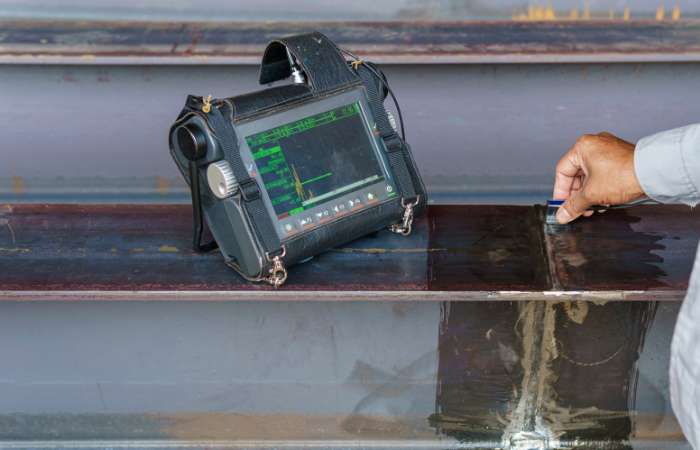
Non-Destructive Testing (NDT) is the practice of evaluating materials, components, or structures without causing damage. It is used across many industries, including oil and gas, aerospace, manufacturing, transportation, and construction, to ensure the safety, integrity, and reliability of critical systems.
Common NDT methods include Ultrasonic Testing (UT), Magnetic Particle Testing (MT), Liquid Penetrant Testing (PT), Radiographic Testing (RT), and Eddy Current Testing (ET). These techniques allow professionals to detect internal or surface flaws, prevent failures, and maintain compliance with industry standards.
Who Needs NDT Certification?
NDT certification is intended for technicians, inspectors, engineers, and technical specialists working in quality control and inspection roles. Employers and regulators require NDT credentials to confirm that personnel meet nationally recognized competency levels for evaluating materials and structures safely and accurately.
In Canada, certification is governed by
Natural Resources Canada’s National Non-Destructive Testing Certification Body (NRCan NDTCB) under the CAN/CGSB-48.9712 standard. This ensures that certified NDT personnel meet professional and regulatory expectations nationwide.
What Types of NDT Exams Are Offered?
In Canada, NDT exams are commonly administered through organizations like
CINDE (Canadian Institute for Non-Destructive Evaluation) or
Natural Resources Canada (NRCan).
Exams are typically offered for methods such as:
- Ultrasonic Testing (UT)
- Magnetic Particle Testing (MT)
- Liquid Penetrant Testing (PT)
- Radiographic Testing (RT)
- Eddy Current Testing (ET)
- Visual Testing (VT)
Each certification confirms your ability to safely and accurately perform that testing method.
How the NDT Certification Process Works
To become certified, candidates must:
- Complete the required training and work experience for their NDT method and level.
- Pass a written (theory) examination.
- Pass a practical (hands-on) examination.
The written exam evaluates your understanding of NDT principles, standards, and procedures. The practical exam measures your ability to apply those principles in real-world testing conditions. Both components are required for full certification.
Where Do You Take Each Part of the Exam?
Authorized examination centres across Canada administer NDT exams under NRCan’s oversight. Here is how the process is divided:
- Written (Theory) Exams:
These can be completed at approved in-person proctored centres such as Ashton Testing Services (ATS).
- Practical (Hands-On) Exams:
The practical portion must be completed at a designated NDT evaluation centre such as CINDE, which has the required equipment, facilities, and certified examiners for practical assessment.
Why In-Person Proctoring Matters for NDT Exams
NDT certification isn’t just about passing a test, it’s about earning trust in high-stakes technical environments. In-person proctoring ensures:
- Exam integrity and fairness
- Employer and regulator confidence in your certification
- A distraction-free, structured testing environment
- Secure handling of materials, including practical exam tools when required
For trades and technical certifications, testing in person strengthens the credibility of your qualification. ATS provides a calm, professional testing environment so you can stay focused and confident.